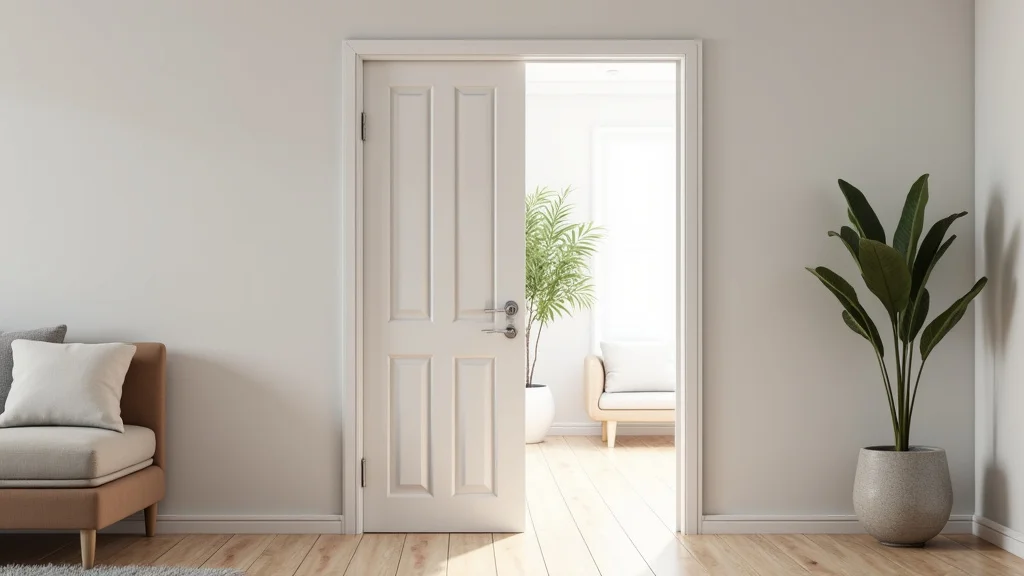
Picture this: you’re rushing to get ready, and your bedroom door swings open, almost knocking you over. Or maybe, the opposite happens, and you struggle to squeeze past a door that opens inward. This seemingly minor detail—whether bedroom doors should open in or out—can significantly impact your daily life, safety, and the overall functionality of your space. This blog post explores the advantages and disadvantages of each option, helping you decide which is best for your home. You’ll gain practical insights and learn about the factors that influence this important design choice, improving both your home’s safety and flow, ultimately making your life a little easier. Let’s explore the best choice for you.
Key Takeaways
- Discover the safety benefits of doors opening in or out.
- Learn how door swing affects space utilization within your room.
- Understand the importance of building codes and accessibility guidelines.
- Explore how door placement impacts evacuation plans.
- Weigh the aesthetic considerations and design implications.
- Make an informed choice for your home based on the post.
Safety and Emergency Considerations for Door Swing
One of the most important aspects when deciding which way a bedroom door should open is safety. This consideration goes beyond just day-to-day convenience; it’s about ensuring your family’s well-being during emergencies. Both inward and outward opening doors have their pros and cons when it comes to safety, and the ideal choice often depends on the specifics of the situation. Evaluating these details is fundamental for making the safest decision for your home.
Outward Opening Doors and Evacuation
Doors that swing outward are generally considered safer in emergency situations, such as a fire. When a fire occurs, the pressure from the flames and smoke can make it difficult to open a door inward, especially if it’s warped or jammed. An outward-opening door is easier to open because you can apply force directly to the door, pushing it away from the room. This is particularly important for children and the elderly, who may not have the strength to force an inward-opening door open. These doors provide a clear and unimpeded pathway to escape, which can be critical for survival during a fire. Prioritizing such practical aspects significantly boosts overall safety.
- Easier egress: Outward-swinging doors are simple to push open, especially in stressful or urgent situations.
- Clear escape routes: These doors do not obstruct the path of someone trying to leave the room.
- Visibility: When the door opens outward, the person inside has a better view of the hallway or surroundings.
Inward Opening Doors and Potential Hazards
While outward-opening doors are usually preferred for safety, inward-opening doors can present some risks during an emergency. If someone falls or places an obstacle near the door, it can make it impossible to open fully, blocking an exit. This is a crucial aspect to take into account, as it can be very difficult to move anything that is up against an inward-opening door, particularly in the dark or if someone is disoriented. Nevertheless, inward-opening doors can be useful depending on the circumstances, and proper planning can help overcome such difficulties.
- Obstruction risk: An inward-swinging door can be blocked by furniture or fallen objects, hindering escape.
- Space constraints: In tight spaces, an inward-opening door might further reduce the available area, making movement difficult.
- Potential for injury: There is a risk of a door opening inward and hitting someone or something inside the room.
Building Codes and Safety Regulations
Building codes and safety regulations often provide guidance on the direction doors should swing, specifically in new construction or when making substantial changes to a building. These codes are in place to ensure public safety, and they frequently prioritize outward-opening doors for bedrooms, especially those directly connected to a hallway or egress route. Always check local building codes before making any changes. These regulations can vary from place to place and must be followed to make sure that the home complies with the law and has a high level of safety for inhabitants.
These codes commonly emphasize that all bedroom doors must allow for easy and unobstructed escape in the event of an emergency. Building codes may also specify the width of the doors and the clear floor space needed for safe passage. Compliance with these codes is not only a legal requirement but also a critical component of ensuring the safety of occupants. The following are essential considerations for adherence to safety rules:
- Code compliance: Ensure that door installation meets local building code requirements, especially concerning outward swing.
- Fire safety: Consider the door’s fire resistance rating, which can delay the spread of fire.
- Emergency access: Always ensure clear access to the door and that the path to exit is unobstructed.
Space Efficiency and Room Design
Space utilization is a key factor when deciding if bedroom doors should open in or out. The size and shape of your bedroom, the placement of furniture, and the overall design of the room are all influenced by the direction of the door swing. Inward-opening doors save space in the hallway but can occupy valuable space within the bedroom. Outward-opening doors do the opposite, and the optimal choice often depends on balancing aesthetics with practical functionality.
Advantages of Inward Opening Doors for Space
In smaller bedrooms, an inward-opening door can be an effective way to maximize space. By swinging inwards, the door doesn’t obstruct hallways and allows for furniture to be placed closer to the door. This can create a more open feel in the hallway, especially in apartments or homes with tight corridors. Inward-opening doors are sometimes preferred in these settings because they can help with the flow of traffic in narrower spaces.
- Hallway space: Inward-opening doors do not take up space in the hallway, which makes the pathway wider.
- Furniture placement: Furniture can be placed closer to the door without being blocked.
- Compact rooms: In smaller rooms, inward-opening doors can create more space.
Drawbacks of Inward Opening Doors in Bedrooms
While advantageous in some cases, inward-opening doors also present drawbacks, particularly in terms of room functionality. A door that swings into the room can eat up valuable space, making furniture layout more complicated. This is specifically true for bigger bedrooms, where space optimization is critical. Also, an inward-opening door can sometimes get in the way, making it difficult to move around the room. An inward-opening door also risks potentially hitting furniture or blocking access to parts of the room.
- Room space: Inward-opening doors take up valuable room space when open, limiting furniture placement options.
- Obstruction: The open door may block access to a closet or other areas of the room.
- Reduced usable space: The door’s swing arc removes usable floor space.
Outward Opening Doors and Their Considerations
Outward-opening doors can be beneficial in many situations, particularly in bedrooms that open to a hallway. In this case, the door swing does not impact room space. They are often the standard design choice in hallways and offer several advantages in terms of safety and ease of access. However, in narrow hallways, an outward-opening door can block traffic, which can be an inconvenience.
- Hallway traffic: An outward-opening door can obstruct hallway traffic.
- Bedroom space: Does not take up space in the bedroom.
- Visibility: Easier to see the hallway when the door is opened.
Aesthetic and Design Considerations
The aesthetic impact of the door swing direction may be just as important as the practical benefits. The appearance of a bedroom door influences the overall feel of the room and the hallway. The door’s design, style, and integration with the space’s interior design, together, play a significant role in creating a cohesive aesthetic.
Impact on Interior Design
The choice of whether a door should open in or out can be related to the interior design of your space. An outward-swinging door, for example, could be designed to be an elegant statement piece in the hallway. On the other hand, inward-opening doors could be integrated into the room’s design to offer a streamlined appearance. The size and shape of the room, as well as the position of the furniture, also affect the aesthetic effect. Careful planning and consideration of the room’s layout will help create a coherent and aesthetically pleasing design.
- Visual flow: The door swing should complement the overall design of the home.
- Hallway design: The outward-opening door can create a welcoming entryway.
- Room design: Inward-opening doors can blend seamlessly with the interior design.
Door Style and Hardware
The kind of door you select, its hardware, and its finish are all important aesthetic factors. These elements can significantly affect the appearance of a room. For outward-swinging doors, consider a statement door that creates a favorable impression. For inward-opening doors, consider the material and color, making sure that it complements the room’s interior. The aesthetic harmony of the room is improved by selecting door hardware that coordinates with the style of the house.
- Door design: The style of the door, whether modern, traditional, or minimalist, affects the overall design.
- Hardware: Hardware choices can enhance or detract from the aesthetic.
- Finish: The finish of the door can affect the light and feel of the room.
The Role of Architectural Style
The architectural style of your home greatly influences the decision about where bedroom doors should open. In older homes, outward-opening doors may be more common, mainly for historic reasons and to meet safety requirements. Modern houses may include inward-opening doors to maximize space. When making a decision, consider the style of the home and select the door swing that best fits the existing architecture. This integration improves the overall look of the property and makes a sense of consistency.
- Period properties: Older homes may require specific door designs to maintain original features.
- Modern spaces: Inward-opening doors are suitable for streamlined, contemporary designs.
- Overall architecture: The door’s design should fit in well with the home’s overall style.
Common Myths Debunked
Myth 1: Outward-opening doors are always required by law.
In reality, building codes vary, and while outward-opening doors are frequently suggested for safety reasons, some locations may allow inward-opening doors, particularly in smaller residences or when specific safety measures are in place. Always verify local rules and requirements.
Myth 2: Inward-opening doors are always easier to force open.
The truth is that this is not always the case. If the door is locked and there is a lot of pressure from the outside, an inward-opening door might be more challenging to force open than an outward-opening door.
Myth 3: Door swing direction is only for aesthetics.
Although aesthetics play a part, the direction of the door swing has a significant effect on safety, evacuation efficiency, and the usability of space. The choice also impacts the general design and feel of a room.
Myth 4: Outward-opening doors don’t take up any space.
Outward-opening doors take up space in a hallway and can obstruct walkways, especially in smaller areas. This can make passage difficult and reduce the overall functionality of the corridor or space.
Myth 5: It’s easy to change the direction a door swings.
While changing the direction a door swings is possible, it can involve significant work, including moving the door frame, changing the hinge locations, and perhaps repainting or fixing the wall. Therefore, it is better to consider your decision well in advance.
Frequently Asked Questions
Question: Is it safer to have bedroom doors open in or out?
Answer: Outward-opening doors are generally considered safer for emergencies because they are easier to open, while inward-opening doors can be blocked by obstructions.
Question: What do building codes say about door swing direction?
Answer: Building codes usually require outward-opening doors for bedrooms, particularly those that open directly into hallways or escape routes, to ensure emergency safety.
Question: How does the size of my room affect my choice?
Answer: The size of your bedroom, as well as the layout of the room, can determine whether an inward or outward-opening door is more useful. Inward-opening doors save hallway space, while outward-opening doors keep the room clear.
Question: Can I change the direction my bedroom door opens?
Answer: Yes, but it could involve a professional to adjust the door frame, and possibly the surrounding wall to correctly fit the new configuration.
Question: Does door swing affect interior design?
Answer: Yes, the direction the door swings has an impact on the overall design and aesthetic of a home, especially the design of the hallway and the room’s interior.
Final Thoughts
The decision of whether bedroom doors should open in or out is more than just a matter of preference. It’s a combination of practical safety, space optimization, and design preferences. Consider the layout of your bedroom, potential obstructions, and building regulations to ensure you create a home that is both safe and convenient. Outward-opening doors often provide better emergency exits, while inward-opening doors can save space in hallways. Before making a decision, analyze your requirements and then take into consideration the home’s aesthetics. Making the correct choice ensures the usability and safety of your house for years to come. Carefully think through the best option for your home, taking into account all the variables. Your final selection will ensure a seamless flow and security for your family.
